Why Weed Growth Happens in Poorly Installed Block Paving
Block paving remains one of the most popular driveway choices for homeowners because of its durability, attractive appearance and versatility. However, when block paving is installed incorrectly, problems can begin to appear surprisingly quickly. One of the most common complaints homeowners face is persistent weed growth between the paving blocks. While weeds are often blamed on poor maintenance alone, the real issue is frequently linked to the quality of the original installation.
For homeowners in Ramsgate, Kent, understanding why weeds develop in poorly installed block paving can help prevent long-term surface problems and protect the condition of the driveway.
Weed Growth Is Often a Sign of Installation Problems
A properly installed block paving driveway should provide a stable and tightly finished surface with minimal opportunity for weeds to establish themselves.
Weed growth becomes more common when:
- Joints between blocks are poorly compacted
- Sanding has not been completed correctly
- Drainage issues allow moisture to collect
- The surface begins to shift or sink
These weaknesses create ideal conditions for weeds to develop over time.
Weak Jointing Sand Allows Weed Development
Jointing sand plays an important role in block paving stability.
Its purpose is to:
- Lock paving blocks securely into position
- Reduce movement between blocks
- Minimise open gaps where weeds can grow
If insufficient sand is used or the surface is not compacted properly, spaces begin to appear between the blocks, allowing dirt, seeds and moisture to collect.
Poor Groundwork Causes Surface Movement
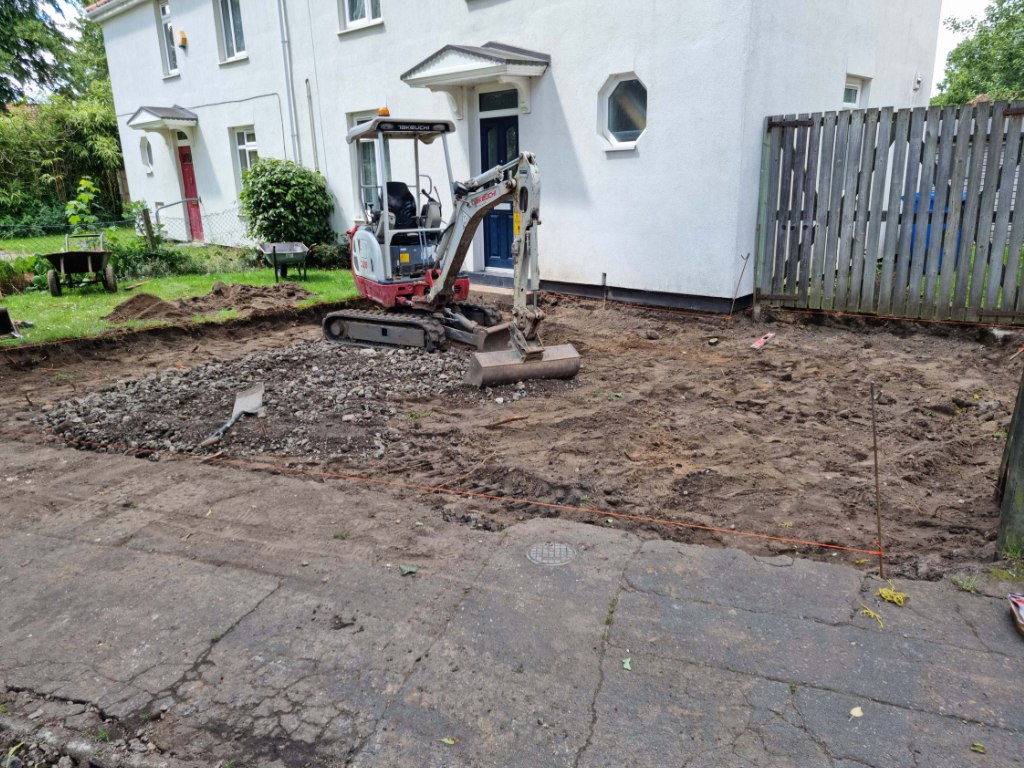
The quality of the sub-base beneath the paving is essential for long-term performance.
Without proper groundwork:
- The surface may begin to sink unevenly
- Blocks can loosen or separate
- Gaps widen over time
Once movement develops within the paving, weeds are far more likely to establish themselves.
Moisture and Drainage Problems Encourage Growth
Weeds thrive in damp environments where dirt and organic matter accumulate.
Poor installation can contribute to:
- Water pooling on the surface
- Excess moisture remaining between blocks
- Drainage issues beneath the paving
In Ramsgate, Kent, where driveways regularly experience wet weather and coastal moisture exposure, effective drainage is particularly important for preventing long-term paving problems.
Cheap Materials Often Deteriorate Faster
The quality of paving materials also affects long-term weed resistance.
Lower-quality installations may involve:
- Weak or inconsistent jointing sand
- Inferior sub-base materials
- Poor edge restraint systems
As these materials deteriorate, the surface becomes more vulnerable to movement and weed growth.
Lack of Proper Edge Restraints Creates Instability
Edge restraints help maintain the shape and structural integrity of the driveway.
Without secure edging:
- Blocks can gradually spread apart
- Joint gaps widen over time
- The paving becomes less stable overall
This instability increases the likelihood of weeds appearing between the blocks.
Weeds Often Start From Surface Debris
Contrary to popular belief, most weeds do not grow up from beneath the paving.
Instead, seeds are usually carried onto the surface by:
- Wind
- Rainwater
- Birds and organic debris
When dirt collects within poorly maintained or poorly installed joints, weeds quickly begin to grow.
Professional Installation Helps Prevent Long-Term Problems
A professionally installed block paving driveway includes:
- Proper excavation and groundwork
- High-quality sub-base materials
- Correct compaction techniques
- Secure edge restraints
- Thorough joint sanding and finishing
These steps create a far more stable and weed-resistant surface.
Routine Maintenance Still Matters
Even well-installed block paving benefits from occasional maintenance.
Helpful maintenance includes:
- Sweeping away debris regularly
- Replacing jointing sand when needed
- Addressing drainage issues promptly
- Removing small weeds before they spread
This helps preserve both appearance and structural stability.
Why Professional Block Paving Installation Matters
Long-lasting block paving depends heavily on the quality of installation from the very beginning.
Ramsgate Driveways provides expert block paving installation services in Ramsgate, Kent, helping homeowners create durable, attractive and professionally finished driveways designed for long-term performance. Every project is completed with careful attention to groundwork, drainage and structural stability to minimise future maintenance issues.
Conclusion
Weed growth in block paving is often a sign of poor installation rather than simple neglect. Weak groundwork, poor jointing and inadequate drainage all create conditions that allow weeds to develop and spread over time.
For homeowners in Ramsgate, Kent, investing in professionally installed block paving is one of the best ways to reduce maintenance problems and improve long-term driveway durability. If your driveway is suffering from movement, weed growth or surface deterioration, Ramsgate Driveways can provide expert guidance and dependable driveway solutions tailored to your property’s needs.
Call us on: 01843 265 695
Click here to find out more about Ramsgate Driveways
Click here to complete our contact form and see how we can help with your Driveway needs.